A cozy, coconutty Thai red curry packed with colorful veggies, ready in about 30 minutes.
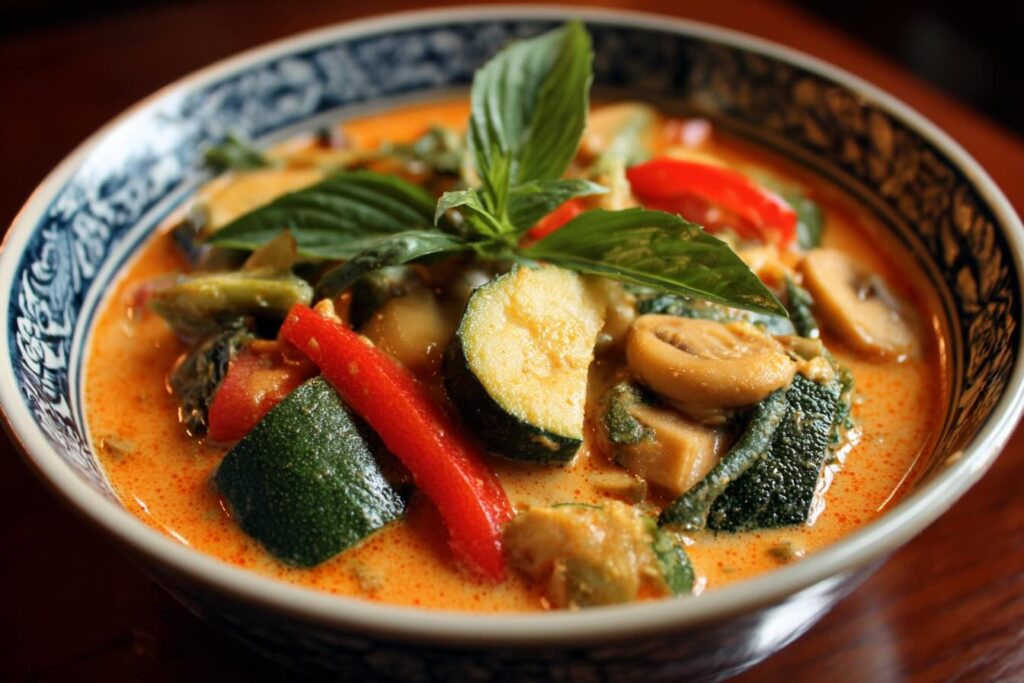
Imagine coming home tired, craving something warm, fragrant, and just a little bit spicy. This Thai Red Curry with Vegetables is exactly that bowl. It brings together creamy coconut milk, bright Thai red curry paste, and a rainbow of vegetables for a dinner that feels like takeout but is actually simple home cooking. You get all the comfort of your favorite Thai restaurant without leaving the house or wondering what went into your sauce.
Thai red curry with vegetables comes from Thai cuisine, where curry pastes are pounded with herbs like lemongrass, galangal, and makrut lime. Most of us are not making paste from scratch on a Tuesday night, and that is completely fine. Using a good store-bought red curry paste is the shortcut that keeps this recipe weeknight friendly while still delivering deep, layered flavor. The veggies are flexible, so you can clear out your crisper and still end up with a beautiful, nourishing bowl.
You’ll love this recipe if you want something that feels special but is still practical. It is naturally dairy free, easily made vegan, and can be on the table faster than delivery. The sauce clings to fluffy jasmine rice, the vegetables stay crisp tender, and a squeeze of lime wakes everything up at the end. It is also very forgiving; once you know the basic method, you can adjust the heat level, swap vegetables, or add protein without stress. Whether you are cooking for yourself or feeding a family, this Thai red curry turns a pile of vegetables into a comforting, restaurant style meal you can pull off any night of the week.
Quick Facts
- Yield: Serves 4
- Prep time: 15 minutes
- Cook time: 20 minutes
- Total time: ~35 minutes
- Difficulty: Easy
- Diet: Vegetarian, easily vegan and gluten free
Ingredients
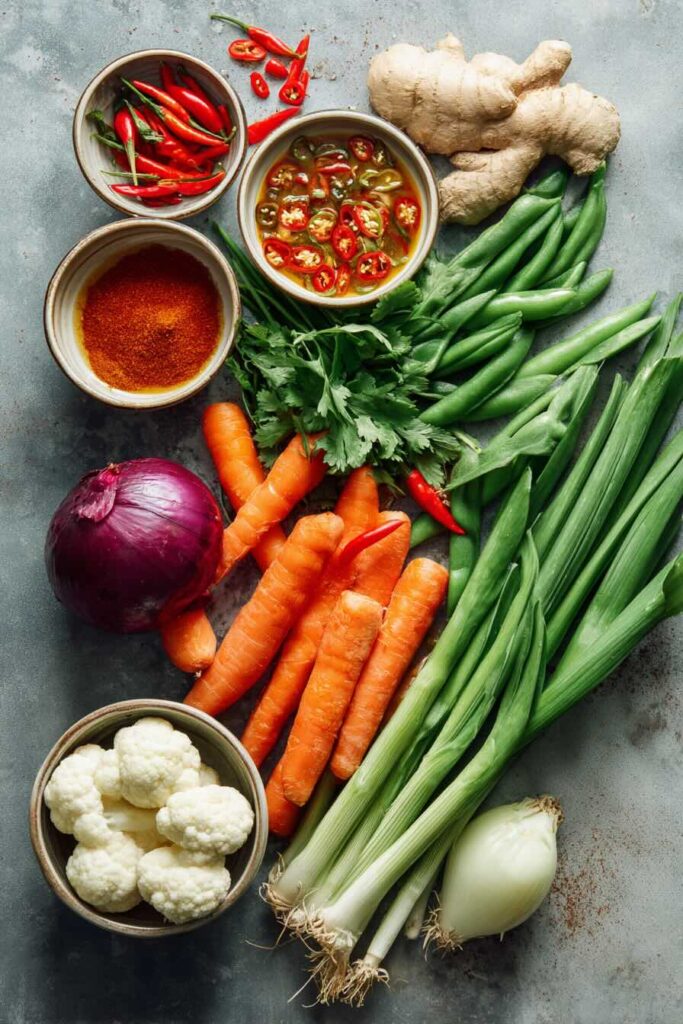
Curry Base
- 1 tbsp neutral oil or coconut oil (15 ml)
- 1 small yellow onion, thinly sliced
- 3 cloves garlic, minced
- 1 tbsp fresh ginger, minced (about 15 g)
- 2 to 3 tbsp Thai red curry paste (30 to 45 g), to taste
- 1 can full fat coconut milk (13.5 to 14 oz / 400 ml)
- 1 cup low sodium vegetable broth (240 ml)
- 1 tbsp soy sauce or tamari (15 ml)
- 1 to 2 tsp brown sugar or coconut sugar (5 to 10 g), to taste
- Juice of 1 lime, plus wedges for serving
Vegetables
Use about 5 to 6 cups mixed vegetables total (roughly 700 to 800 g):
- 1 red bell pepper, thinly sliced
- 1 small carrot, thinly sliced on the diagonal
- 1 heaping cup broccoli florets (about 150 g)
- 1 heaping cup sugar snap peas or green beans, trimmed (about 150 g)
- 1 small zucchini, halved lengthwise and sliced
Optional Add Ins
- 1 block firm tofu (14 oz / 400 g), pressed and cubed (optional, for extra protein)
- 1 to 2 tsp vegetarian fish sauce or regular fish sauce (optional, adjust salt)
- Crushed red pepper flakes or sliced fresh chili, to taste (optional, for extra heat)
To Serve
- 3 to 4 cups cooked jasmine rice (about 600 to 800 g cooked)
- Fresh cilantro or Thai basil leaves, roughly torn
- Lime wedges
- Sliced green onion (optional)
💡 Shopping tip: Look for Thai red curry paste in the international aisle; brands from Thailand often have the brightest flavor and color, and a little goes a long way.
Step by Step Instructions
- Prep the ingredients Wash and chop all vegetables into bite sized pieces so they cook evenly. Press and cube the tofu if using. Have the curry paste, coconut milk, and broth measured out and ready. 💡 Tip: Prep everything before turning on the heat; this curry comes together quickly once you start cooking.
- Sauté aromatics (3 to 4 minutes) In a large skillet or wide saucepan, heat the oil over medium heat. Add the sliced onion and cook until beginning to soften and turn translucent, about 2 to 3 minutes. Stir in the garlic and ginger and cook until fragrant, about 30 seconds.
- Bloom the curry paste (1 to 2 minutes) Add the Thai red curry paste to the pan and stir it into the aromatics, pressing it down so it hits the heat. Cook for 1 to 2 minutes until it darkens slightly and smells very fragrant. 💡 Tip: Blooming the paste in oil deepens the flavor and helps it evenly season the curry, so do not skip this step.
- Build the sauce (3 to 4 minutes) Pour in the coconut milk and vegetable broth, whisking or stirring to dissolve the curry paste into a smooth, reddish sauce. Add soy sauce or tamari and 1 tsp of the sugar. Bring to a gentle simmer over medium heat. The sauce should look silky and slightly thickened.
- Cook the firm vegetables (5 to 7 minutes) Add the carrot and broccoli florets first, since they take a bit longer to soften. Simmer in the sauce for 3 to 4 minutes, stirring occasionally, until they begin to turn bright and slightly tender.
- Add remaining vegetables and tofu (5 to 7 minutes) Add the bell pepper, snap peas or green beans, zucchini, and tofu cubes if using. Simmer for another 4 to 5 minutes until the vegetables are crisp tender and the tofu is heated through. Avoid boiling vigorously so the vegetables stay vibrant. 💡 Tip: If the sauce reduces too much before the veggies are done, splash in a little extra broth or water, 2 tbsp at a time, until you like the consistency.
- Season and finish (1 to 2 minutes) Stir in the lime juice and taste. Adjust with more soy sauce for salt, more sugar for balance, or more curry paste or chili for heat. If using fish sauce, add a small splash and taste again. Turn off the heat once everything tastes bright and balanced.
- Serve Spoon hot curry over bowls of cooked jasmine rice. Garnish with fresh cilantro or Thai basil, green onions, and extra lime wedges. Serve immediately while steaming and fragrant.
Variations & Substitutions
- Use cauliflower or baby corn in place of broccoli or carrot if that is what you have.
- Swap tofu for chickpeas for a quicker, no press protein option.
- For a richer curry, use coconut cream for part of the coconut milk.
- For lighter fare, use light coconut milk and an extra splash of broth.
- Make it gluten free by using tamari or a certified gluten free soy sauce.
Make Ahead, Storage & Reheating
- Make ahead: The curry improves as it sits. You can cook it fully up to 2 days in advance and gently reheat before serving. For best texture, slightly undercook the vegetables if you know you will reheat later.
- Storage: Cool completely, then store in an airtight container in the fridge for up to 4 days. Store rice separately to prevent it from getting mushy.
- Freezing: The curry sauce and vegetables can be frozen for up to 2 months. Some vegetables may soften a bit on thawing, but the flavor remains excellent. Freeze without rice for best results.
- Reheat: Reheat gently on the stovetop over medium low heat, adding a splash of water or broth to loosen the sauce. Or microwave in 45 to 60 second bursts, stirring between each, until hot. Finish with a fresh squeeze of lime.
Nutritional Info (Estimated, per serving)
Based on 4 servings of curry plus jasmine rice:
- Calories: ~430
- Protein: ~9 g
- Carbs: ~40 g
- Fat: ~25 g
💡 Note: Estimates vary by brands and portions.
Serving Suggestions
- Serve over fluffy jasmine or basmati rice to soak up the sauce.
- Add a side of cucumber salad dressed with rice vinegar for a cooling contrast.
- Top bowls with roasted peanuts or cashews for crunch.
- Pair with fresh mango slices or a simple fruit salad to balance the gentle heat.
- Offer chili crisp or sliced fresh chili on the side for spice lovers.
Recipe FAQs
How spicy is this curry?
The heat level depends on the brand and amount of red curry paste. Start with 2 tbsp for medium spice and adjust at the end with more paste or chili if you like it hotter.
Can I use light coconut milk?
Yes. Light coconut milk works, but the sauce will be thinner and less rich. You may want to simmer a bit longer to reduce or add a teaspoon of nut butter for extra body.
What if I do not have all these vegetables?
This recipe is very flexible. Use about 5 to 6 cups of whatever quick cooking vegetables you have, such as mushrooms, spinach, cabbage, or frozen mixed vegetables. Add softer vegetables later so they do not overcook.
Can I add chicken or shrimp?
If you are not keeping it vegetarian, sliced chicken or peeled shrimp can be added after the sauce is built. Simmer chicken until cooked through, about 6 to 8 minutes, or shrimp until pink and opaque, about 3 minutes.
Does this freeze well with tofu?
Yes, but expect the tofu to become a bit more spongy after thawing. If that texture bothers you, freeze just the sauce and vegetables, then add freshly cooked tofu when reheating.
Final Notes
Thai Red Curry with Vegetables is one of those recipes that slips easily into your weeknight rotation yet still feels special enough for a relaxed weekend dinner. Once you have a jar of curry paste and a can of coconut milk in the pantry, you are never far from a cozy, colorful meal. The beauty of this curry is how adaptable it is; you can lean into whatever vegetables you already have and adjust the spice, richness, and garnishes to match your mood.
If you try this recipe, I would love to hear how you made it your own. Did you add tofu, swap in chickpeas, or sneak in extra greens The comments section is a great place to share your tweaks and tips so other home cooks can be inspired too. If this curry brought a little comfort to your table, feel free to share the recipe with a friend who could use an easy, nourishing dinner idea. Happy cooking, and enjoy every last spoonful of that flavorful sauce.